What Is Warehousing?
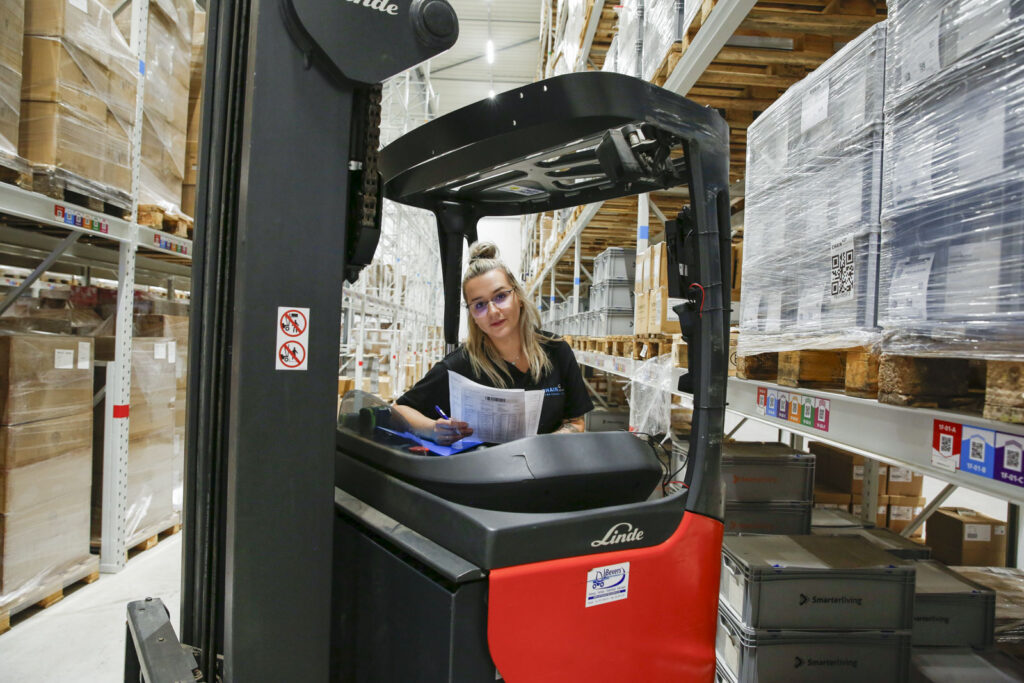
In the logistics industry, people often talk about Warehousing. But what exactly is warehousing, and why should you use it? We’ll explain it below.
The Definition of Warehousing
Warehousing is the storage of goods that will later be sold or distributed. Sometimes the terms “warehouse” and “distribution center” are used interchangeably, but they are not the same. A warehouse is essentially just a storage facility, while a distribution center handles not only storage but also order picking and order processing (often including transport).
Warehouses
The goods are stored in a designated storage facility, known as a warehouse. Warehouses are specifically designed to store products for both short- and long-term periods. They are commonly used by manufacturers, importers, exporters, wholesalers, transportation companies, and so on. Some large companies have their own warehouses, but in most cases, such a space—or part of it—is rented. Thanks to this external storage option, manufacturers, retailers, wholesalers, and similar businesses do not need to manage their own inventory. This often saves on space and costs.
A characteristic feature of warehouses are the loading docks where trucks can unload their cargo
loading and unloading. In addition, most warehouses have:
- Large racks that offer maximum storage capacity and easy access to the products. The goods are stored here in an organized and secure manner;
- Cranes, forklifts, and/or conveyor belts to sort the goods or move them through the warehouse;
- Inventory management software that allows you to determine what, where, how, how much, and when items are stored;
- Advanced security systems.
The types of products stored vary widely. This can include the storage of consumer goods from retail stores and online shops, as well as raw materials, packaging materials, (spare) parts, or components related to agriculture.
and production.
Warehouse Management
A warehouse is almost always equipped with an advanced warehouse management system (WMS). Warehouse management is really nothing more than the management of the warehouse.
This management is often carried out using a warehouse management system that focuses primarily on receiving, storage, and shipping. The system always provides up-to-date information about the relevant inventory: how much is still in stock (and therefore what may need to be restocked), where the inventory is located in the warehouse, how many orders are coming in, what needs to be packed and how, information about transportation and shipping, and so on. In other words: a WMS manages the flow of goods within the warehouse. With such a system, both warehouse staff and customers always have insight into the current inventory.
Why warehousing?
As briefly explained above, companies often opt for warehousing when they do not have their own storage space or warehouse. But also for cost reasons: there is no need to invest in personnel and a location themselves. The storage and transshipment of goods, inventory management, order picking, and transportation are handled by the service provider, so warehousing also offers significant convenience for the customer. This allows the customer to focus on the core activities of his or her business.
Related information:
Chain Logistics & Warehousing
Above, you can read about what warehousing generally entails. As a versatile logistics service provider, we also offer you warehousing solutions. So, for reliable and cost-effective storage and inventory management, you really don’t need to look any further!
Learn more about our warehousing options? Please feel free to contact Join us.