Interview about Open Hiring at Chain Logistics
Now that the number of unemployed people is rising sharply due to the COVID-19 crisis, it will become more difficult for many workers who are marginalized in the labor market to find a job. For them, it’s often difficult to navigate standard job application procedures: a resume with a gap in employment history, a non-Western last name, or being over 55 and recently unemployed are often enough reasons to reject someone. But thanks to Open Hiring, everyone can find work, because this American concept works differently: you don’t have to send a cover letter or go through a job interview. You put your name on a waiting list, and as soon as it’s your turn, the job is yours. No one is excluded, and everyone gets a chance. It sounds like a fairy tale, but it’s actually happening in the Netherlands—even during this crisis.
“I’d been applying for jobs for 15 years, but I always got turned down.”

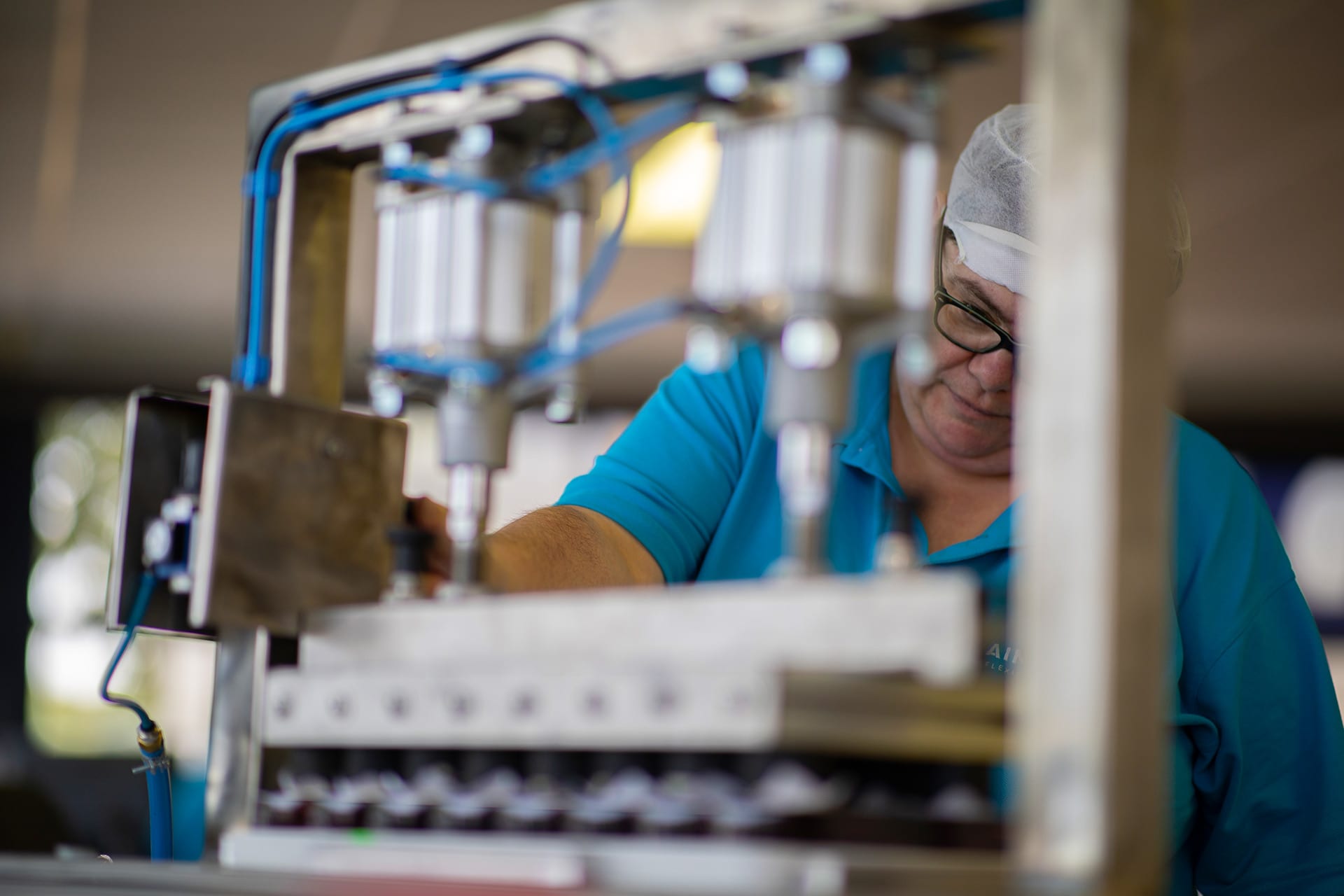
For example, last May, 50-year-old Gertie started working as a production worker at the logistics service provider Chain Logistics in Uden through Open Hiring. “I’d been applying for jobs for 15 years, but I always got turned down. I really wanted to work and contribute financially to my family, but I was rejected time and time again. Either because I didn’t have enough experience, or because they were afraid I’d have to take time off due to the chronic pain in my arms. Or I wasn’t given a reason at all. I felt like the walls were closing in on me at home. It’s so nice to be around people again. And the work is fun: checking, sorting, assembling—it doesn’t really matter to me what I do, as long as I can stay busy.”
For Gertie, Open Hiring is a godsend. She’s finally back at work after all those years of fruitless job hunting. And even though she suffers from chronic pain: “When I’m working, I’m distracted and the pain bothers me less than it does at home. So I’d rather work!”
Bernie Glassman, an American, is the founder of Open Hiring. In 1982, he started Greyston Bakery, a cookie factory in Yonkers, a disadvantaged neighborhood in New York. Poverty and crime are rampant there. Glassman wants to combat poverty by creating jobs for people who have the hardest time finding work: ‘We don’t hire people to bake brownies, but we bake brownies to hire people,’ is his motto. He doesn’t ask the people he offers jobs any questions. Whether or not they have an education, a criminal record, or a disability? Greyston Bakery doesn’t need to know. The only thing that matters is the willingness to work. This approach has proven to be effective. Since its founding, the company has created thousands of jobs, and a successful partnership with ice cream maker Ben & Jerry’s has firmly put the company and the Open Hiring philosophy on the map.
In 2019, Greyston Bakery and the Dutch social enterprise Start Foundation entered into a partnership to introduce Open Hiring in our country. There are now 13 companies filling job openings through Open Hiring.
The same goes for Chain Logistics: “When I first heard about Open Hiring, I thought, ‘That’s not for us.’ We employ a lot of truck drivers, and it didn’t seem like a good fit for them,” says Rob Jansen, director of Chain Logistics. “But for assembly work, it’s a different story. There’s more room for guidance during the first few weeks, and now we’re absolutely thrilled!”
Chain Logistics (75 employees) is one of the first companies asked by Ingeborg Zwolsman of the Start Foundation to participate in the experiment to Open Hiring in the Dutch labor market, and the company has since hired 18 employees through Open Hiring. “It’s mainly small and medium-sized businesses that are well-suited to this philosophy: there needs to be a short line of communication between management and employees. And a high level of commitment is important. These are the employers with a ‘warm heart’ who are the first ones you approach for this,” says Ingeborg Zwolsman.
Rob Jansen is one such employer with a warm heart. When he founded Chain Logistics 20 years ago, he resolved to lead in a different way than the American companies he had worked for up to that point. Their harsh, business-first mentality didn’t appeal to him. “There has to be a better way,” says Rob. “We want to be a socially responsible business and give back to society. Making money is also important—because we want our company to still be around in 20 years—but hiring people who face barriers to the job market or giving them a chance to grow further is so much more rewarding than just making money.”
“Open Hiring is the fairest system there is”
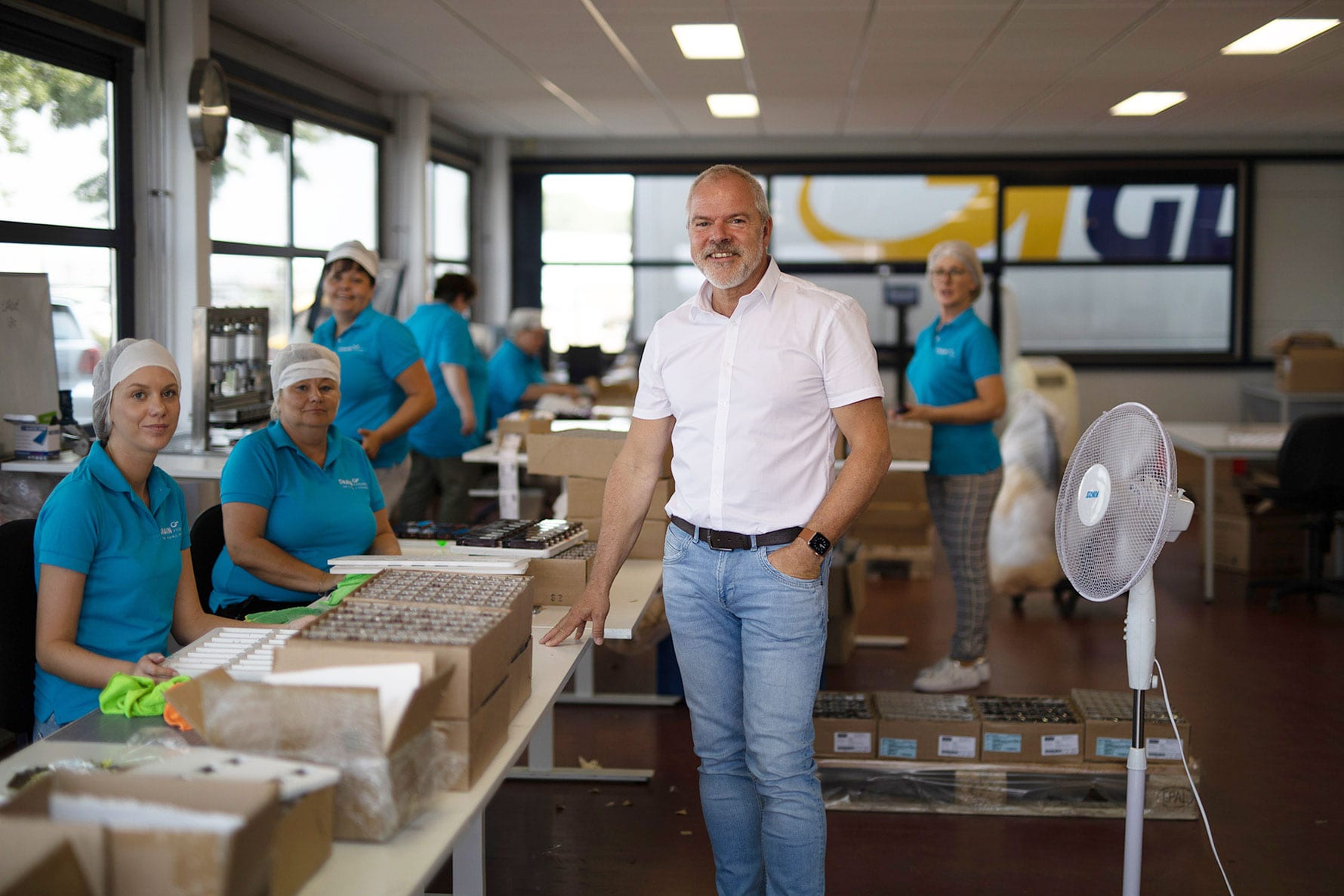
Although Rob isn’t immediately convinced that the philosophy of Open Hiring is a good fit for his company, he nevertheless accepts the Start Foundation’s invitation. “At first, I was pretty skeptical about what kind of people we’d end up with and hesitant about whether this would work. But I think you have to be open to new initiatives; otherwise, nothing will ever change.” So flyers are distributed and calls for applicants are posted on social media, and people can sign up to become production workers. To register, people have to come by in person. “We’re located in an industrial park outside Uden, so you literally have to take a step to get here.”
“The great thing about Open Hiring is that you can show you’re up to the job—you can really prove yourself.”

Twenty-five people apply. At that time, there is one 40-hour-per-week position available. Suzan is first on the list and therefore gets the job. “I would never have hired Suzan. I would have rejected her based on her appearance. She had eccentric hair, piercings, and tattoos. It turns out that you’re actually very prejudiced and rely too much on first impressions, because Suzan has been with us for over a year now and she’s doing an excellent job. I was shocked by my own prejudices and am convinced that everyone judges people based on first impressions—and that’s not always accurate. I’m glad this system helps you move away from that. With Open Hiring, employees get a month to prove themselves, to show what they’re worth. That’s the fairest system there is,” says Rob.
Before starting work in the production department at Chain Logistics through Open Hiring, Suzan had stayed home for ten years to care for her children. She wanted to work, but applying for a job was a big step for her. “I suffer from panic and anxiety attacks, and I find it hard to try new things. I find job interviews terrifying, and I’m not good at selling myself during them. When I read about Open Hiring on Facebook, I went with my husband to Chain Logistics to sign up. But I didn’t dare do it on my own.”
Suzan is the first to sign up and can start right away. And even though she finds it a bit nerve-wracking, things go well, and after the trial month, she’s allowed to stay and is offered a contract. “The great thing about Open Hiring is that you can show you’re up to the job—you can really prove yourself. I’ve made friends here now, and I love being part of a company. It’s really a warm and welcoming environment here; everyone is kind and wants to help each other. And it’s a lot of fun. After two months, I told them a bit about my background. I can be very hard on myself, but they show me here that they’re happy with me. That helps me cope better with my anxieties. I really enjoy coming here every day.”
“As an employer, you don’t know anything about people when they start, but as soon as they’re walking around here, they start talking and you learn about their backgrounds. Sometimes you hear heartbreaking stories, and you’re glad you brought them on board. They’re all highly motivated people. That makes for a very pleasant work environment. Anyone with a good attitude, a positive work ethic, and the desire to grow is more than welcome here. Besides, it’s in our own best interest. Production work can be quite difficult to schedule; sometimes there’s a lot of work, sometimes a little less. You have to handle that with a flexible pool of employees. Thanks to Open Hiring, we now have 70 motivated people on our job applicant list, and we have enough employees to get the work done.”
“Thanks to Open Hiring, we now have 70 motivated people on our job applicant list, and we have enough employees to get the work done.”
Rob has high hopes for Open Hiring in the Netherlands: “Right now, it’s a strange time because of the COVID-19 crisis. Unemployment will rise, and fewer companies are currently in need of staff. But labor shortages will certainly return, and when they do, Open Hiring will be a great way to recruit staff. This is especially true for roles where you have a clear understanding of the requirements from the start. I’m convinced that every company has roles where you could give this a try. With Open Hiring, you can be sure that absolutely anyone who wants to work has a fair chance at a job.”