What is the difference between 3PL and 4PL?
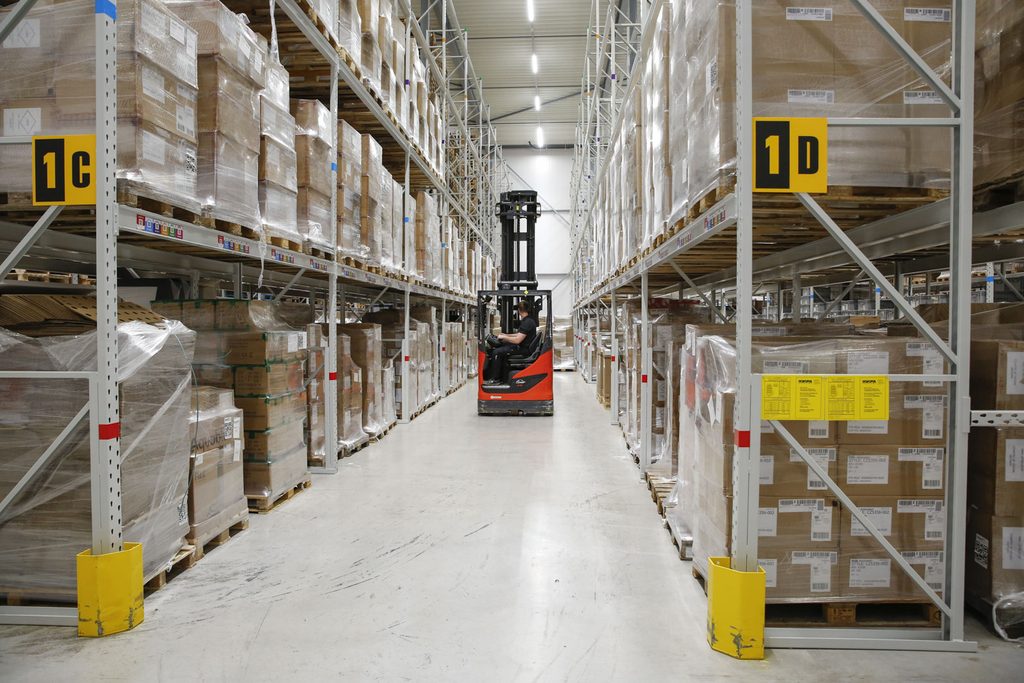
3PL is a service that allows companies to outsource logistics services to another party. Read our “What is 3PL”Read this article to learn exactly what 3PL is.".
Differences Between 3PL and 4PL
3PL stands for Third-Party Logistics. And as you might have guessed, 4PL is an abbreviation for Fourth-Party Logistics.
You’ll quickly come across the terms 3PL and 4PL when you’re looking for a logistics service provider that can handle your company’s logistics operations. Both 3PL and 4PL service providers can meet these needs, but what exactly are the differences between them? This article explains how the two differ from one another and, above all, shows that they are closely related. This explanation will help you decide which of the two services best suits your current business operations and plans.
A single logistics service provider
When you talk about 3PL, you’re referring to multiple logistics activities under one umbrella. A company that uses these logistics services chooses a single logistics service provider to handle transportation, inventory management, and assembly. If you need more than one logistics solution, 3PL offers the answer.
The entire supply chain
Unlike a 3PL service provider, a 4PL service provider can manage the entire supply chain. A 4PL company does not always have its own facility. The strength of a 4PL company lies in finding suitable logistics service providers to whom logistics activities are outsourced. In this way, a 4PL service provider primarily acts as an intermediary. You can also view a 4PL service provider as a supply chain orchestrator. A 4PL service provider engages 3PL service providers to carry out the logistics operations.
Specific Differences and Similarities
The differences between the two services are listed below:
| 3PL | 4PL | |
| Transport | X | X |
| Storage | X | X |
| Warehouse | X | X |
| Processing Product Orders | X | |
| Purchasing Supplies | X | |
| Strategic partner | X |
The table above shows that with 4PL, services such as transportation, storage, and warehousing are also handled, but that additional services are provided. A service provider that offers 4PL services can oversee the entire supply chain and optimize the entire supply chain management process. It also processes product orders, purchases consumables, and acts as a strategic partner.
For adults or children?
Both small and large companies choose to outsource their logistics operations and make use of 3PL or 4PL. Larger companies are often capable of handling these processes themselves, but outsourcing is a strategic choice for them. Smaller companies, on the other hand, often lack a large warehouse, their own production staff, or truck drivers. In such cases, it also makes sense to outsource these processes. Their strengths lie, for example, in marketing or in the high-quality technical manufacturing of products at manufacturing companies. They are less proficient in the logistics process; they are not certified for it, or they lack the necessary resources (including transportation). Processes in which they themselves are not specialized are professionally carried out with the help of 3PL and 4PL services.
Why choose 3PL or 4PL?
As the need to outsource multiple sub-processes grows, companies utilize 1PL through 5PL. This is often a sliding scale. If a company uses 3PL, an external logistics service provider acts as an intermediary. A company that uses 3PL always knows where its goods are located. That provides control. At the same time, 4PL offers a solution because global trade is steadily increasing. If a company needs to scale up, this can be easily arranged with 4PL.
Frequently Asked Questions
The questions that 3PL or 4PL service providers receive regarding their range of services do not so much concern the differences between 3PL and 4PL. For example, 3PL might mean that a company offers transportation and warehousing, but it could just as easily handle assembly and provide procurement support. Chain Logistics offers both 3PL and 4PL services. Employees at Chain Logistics have noticed that customers are often surprised to learn that, in addition to transportation, they can also receive assistance with warehousing and assembly. The questions customers ask Chain Logistics therefore focus primarily on what can be outsourced and how far the possibilities extend.